
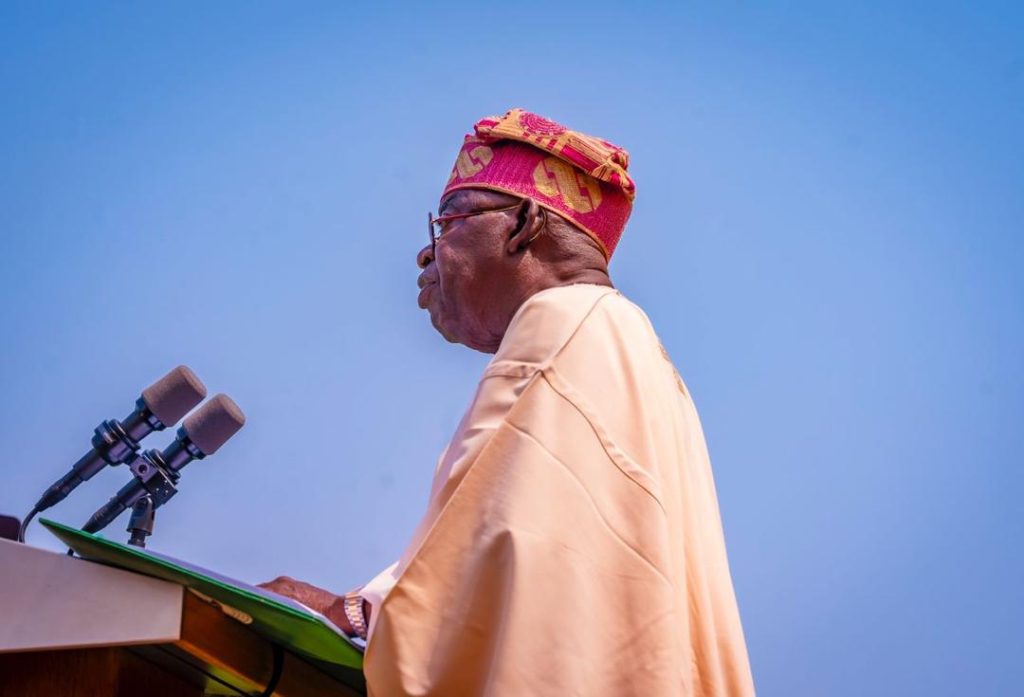

The Nigerian National Petroleum Company (NNPC) has announced petrol discount for the next thirty (30) days, with the move receiving support from President Bola Ahmed Tinubu.
This was made known via a State House Press Release signed by the President’s Special Adviser on Information and Strategy, Bayo Onanuga, on Thursday 8 October, 2026.
The SHPR titled ‘NNPC Retail forgoes petrol profit margin to offer some support to Nigerian households amid global petrol crisis; FG announces additional measures’ reads:
“The Nigerian National Petroleum Company (NNPC) agreed today to forgo its petrol retail profit margin and sell to Nigerians at cost to cushion the impact of global crude oil price shocks and volatility on vulnerable households.
“NNPC Retail, which already sells petrol at the lowest price in the market, will offer this new deal within the next 30 days. This means if NNPC’s landing cost is N1300, it will sell fuel to Nigerians, especially commercial vehicles, at the same price.
“The company’s discount gesture, backed by President Bola Ahmed Tinubu, was among the raft of measures the Finance Minister and Coordinating Minister of the Economy, Taiwo Oyedele, announced today.
“Oyedele said he hoped other marketers would take a cue from the NNPC, as the sharp rise in crude and petrol prices is not expected to last long.
“Oyedele was emphatic that NNPC agreeing to sell at a discount must not be misinterpreted as the restoration of petrol subsidy, which ended on May 29, 2023.
“In addition, Oyedele announced forward sales of crude to domestic refineries. As production rises and previously committed crude is freed up, this is expected to shield pump prices from global market volatility.
“Oyedele also said the Federal Government is negotiating a ceiling of N1,350 a litre on the ex-gantry or landing cost of petrol, to keep pump prices stable. Where costs rise above the ceiling, refiners and importers will carry the shortfall and recover it later, when crude prices or the exchange rate allow, without breaching the ceiling.
“”This is neither a subsidy nor a price control: it is designed to smooth prices over time rather than suppressing them. The reasoning is simple. 1,400 naira a litre today and 1,400 tomorrow is better than 1,500 today and 1,300 tomorrow, because volatility itself adds to uncertainty and cost. And when fares rise sharply, they rarely fall as fast. The ceiling will be reviewed monthly, reset as costs require, and the figures published for transparency,” Oyedele said.
“Oyedele also said that, under the 2025 tax reform laws, the Federal government, in collaboration with the states and security agencies, is reining in the collection of road taxes and levies that inflate fares and logistics costs.
“The Federal government is also increasing funding for cash transfers to the most vulnerable households and subsidised credit for small businesses and consumers.
“Other measures announced:
“A faster CNG Rollout
“The federal government is scaling up CNG deployment with the states. The government expects transporters to pass the savings on to passengers in lower fares. CNG is 60-70 per cent cheaper than petrol.
“An excess profit tax
“This will be considered for operators who take undue advantage of consumers, anywhere along the energy value chain. The government said it will use proceeds from taxes on price gouging exclusively to cushion the impact of fuel prices through transport support or vouchers for urban minimum-wage earners, who are most vulnerable
“National Strategic Fuel Reserve
“To protect households and businesses from future energy shocks, the Federal Government is investing in a National Strategic Fuel Reserve. The government will release refined products into the market under clear, published rules whenever a global disruption or hoarding threatens supply and price stability.
“Better Traffic and Logistics Management
“Traffic management agencies will improve traffic flow, especially in major urban centres, to reduce fuel consumption. Also, NIPOST’s newly launched address codes will help make logistics more efficient and cheaper.”